
Heltec MeshPocket 5000mAh Review: A Practical Assessment for Field Use
The Heltec MeshPocket promises an Meshtastic Radio and Powerbank. One performs better than the other.

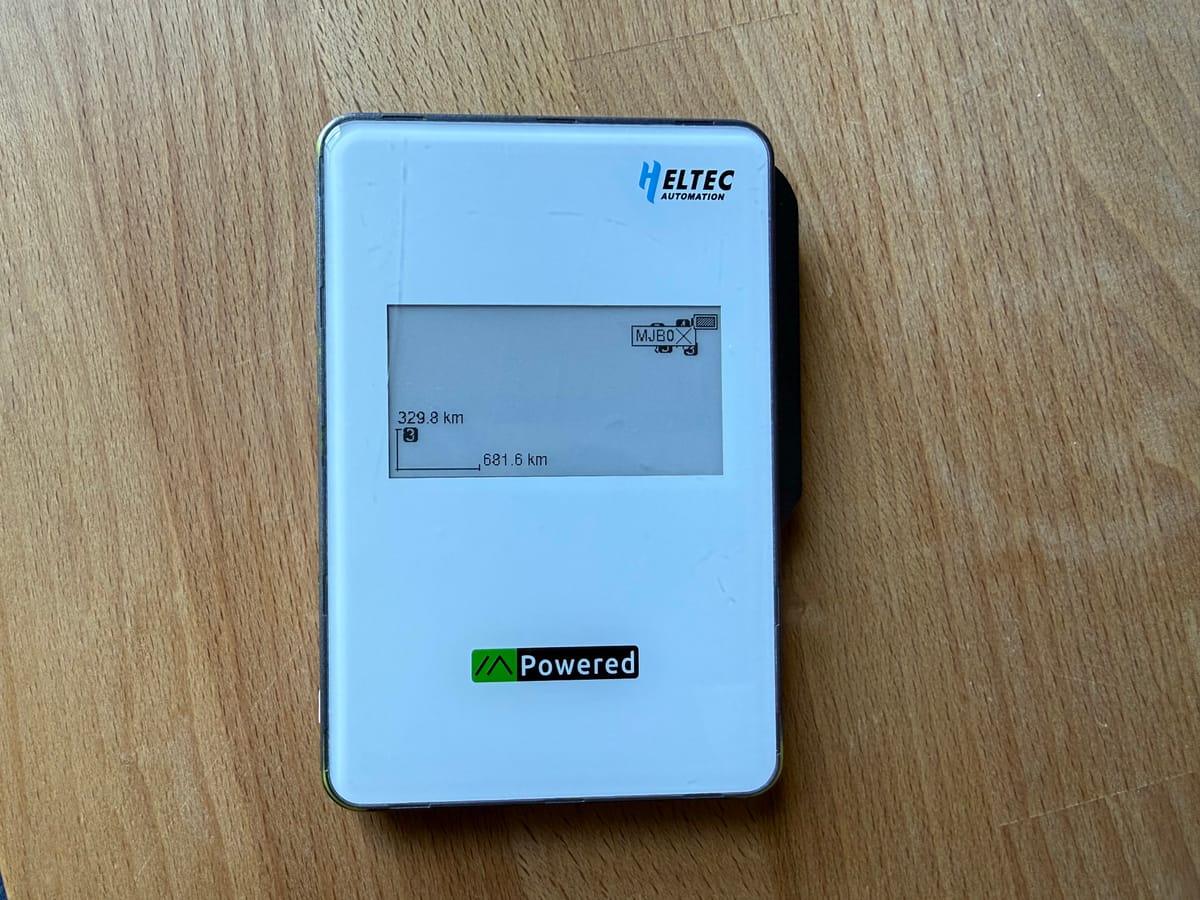
The Heltec MeshPocket has been positioned as an all-in-one solution for Meshtastic users—combining a power bank, integrated LoRa radio, and e-ink display in a compact package. After several months of real-world use, I wanted to share an honest assessment of what works, what doesn't, and whether it's worth your investment.
What You're Getting
The MeshPocket 5000mAh is essentially three devices in one:
- A Qi2-compatible wireless power bank that supports 5W, 7.5W, 10W, and 15W wireless charging
- A native Meshtastic node with an integrated LoRa radio (nRF52840 MCU + SX1262 transceiver)
- An e-ink display for viewing messages and basic node information without needing your phone
The hardware looks polished at first glance. It's compact, the yellow and silver color scheme stands out, and everything feels solidly constructed initially.
Wireless Charging: The Marketing vs. Reality Gap
Here's where expectations meet a hard limit. Heltec advertises this as a power bank with integrated wireless charging—a genuinely useful feature if it worked reliably. It doesn't.
The core issue: Wireless charging drains the MeshPocket faster than it charges your phone by far. Testing with an iPhone showed approximately 25% charge transferred before the MeshPocket's battery was depleted. More problematically, the range of the LoRa radio degrades significantly during wireless charging. Heltec's official documentation actually acknowledges this, noting that the magnetic field generated by the charging coil interferes with RF signals. Their recommended workaround is simply turning off wireless charging if you need reliable range.
This fundamentally undermines one of the device's main selling points. If you're in the field relying on Meshtastic communication and your phone battery dies, you can't charge it and maintain your mesh connectivity simultaneously.
USB-C charging performs better—you can get approximately 60% charge on your phone before the MeshPocket battery is exhausted when charging wired. That's roughly double the wireless performance. If you're buying this specifically for the wireless charging feature, you're better off with a conventional power bank.
Build Quality Concerns
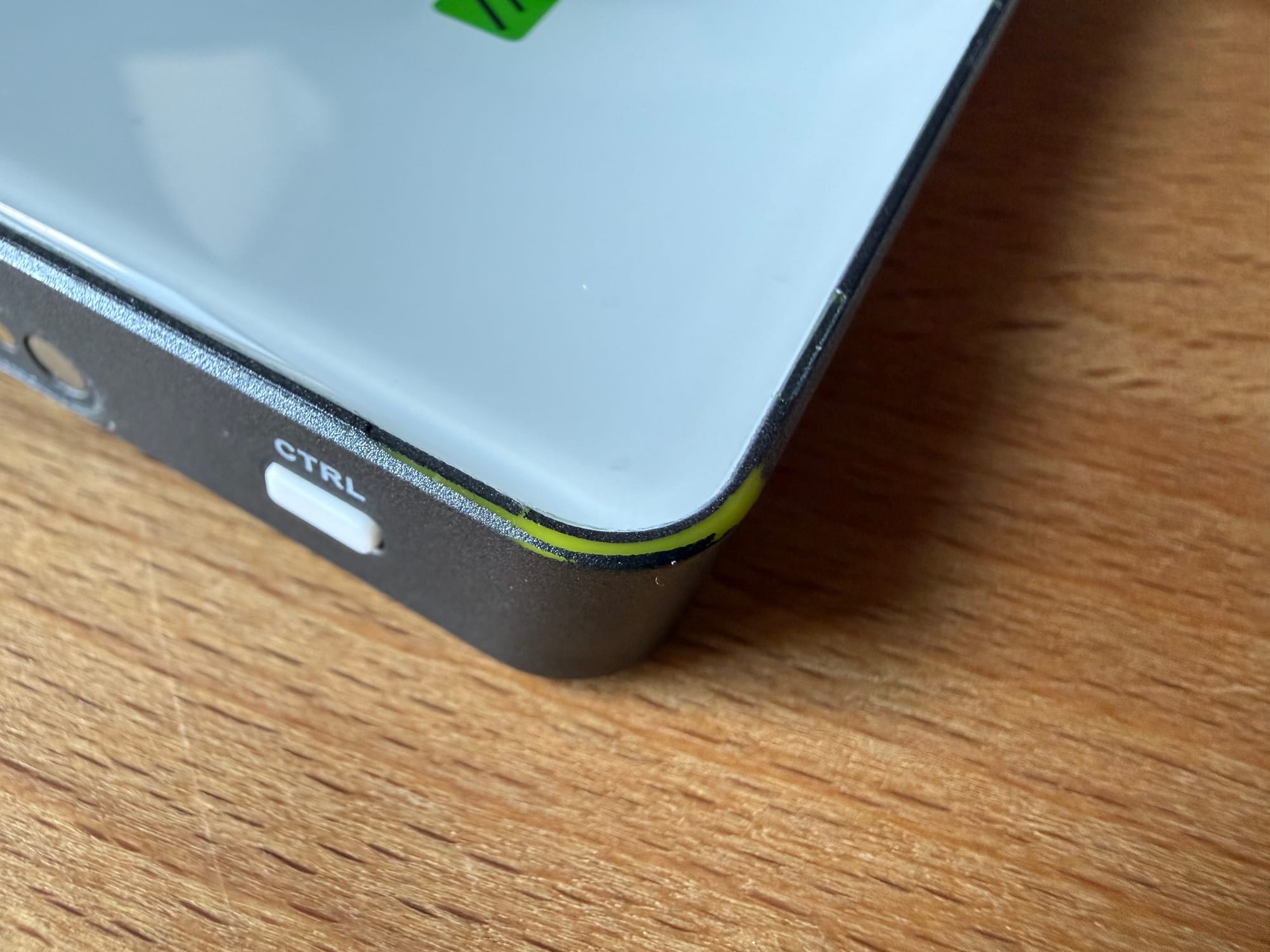
The silver and yellow coating raises durability questions. Within normal use (backpack carry, occasional pocket use), the silver paint is visibly wearing through at the edges, revealing the yellow underneath. For a $69 device, the finish doesn't feel robust enough for long-term field work.
Magnetic attachment to phones: The magnetic attachment to the back of iPhones works initially but isn't strong enough to be considered truly secure for active use. If you're hiking or moving around, you'll be conscious of the device's position. For stationary use (leaving it on a window sill, for example) it's fine. For "throw it in your pack and forget it" durability, it's not reliable enough.
The magnetic pogo pin connector on the side for firmware updates is convenient but fragile—even slight bumps can disconnect it, as noted by other users. That said, this is primarily a development-phase concern unless you're frequently updating firmware.
Where It Actually Excels: Battery Life
This is the MeshPocket's legitimate strength. With Meshtastic running and wireless charging completely disabled, the battery life is exceptional. Under normal use conditions, the device only needs charging once every 2-3 weeks. That's genuinely impressive for a device that maintains full LoRa functionality.
The nRF52840 MCU is the reason. Unlike ESP32-based Meshtastic devices that consume significantly more power, the nRF52840 is designed for low-power operation. Pair that with an e-ink display (which only consumes power during updates, unlike always-on OLEDs), and you get substantial battery endurance.
If you're deploying this as a stationary node or carrying it in a backpack where you don't need to charge it frequently, the 2-3 week runtime between charges is a legitimate advantage over most competing devices.
Range Performance
The integrated antenna delivers respectable range for a power bank. It performs comparably to other Meshtastic devices with internal antennas and is certainly adequate for urban and suburban mesh networking. You won't achieve external antenna performance, but the tradeoff for a compact all-in-one device is acceptable.
The Honest Recommendation
I'm keeping mine, but with clear-eyed expectations. The MeshPocket makes sense in specific scenarios:
Get it if:
- You want a Meshtastic node that you can deploy in a backpack or fixed location and not worry about charging for weeks
- You're building out a personal mesh network and want a secondary node that stays powered without maintenance
- You specifically need integrated power banking but can work around the wireless charging limitation
- You're willing to use USB-C charging exclusively (ignoring the wireless feature entirely)
Skip it if:
- You need reliable wireless charging during travel or outdoor situations
- You expect to use this as an active, daily-carry device that charges your phone while maintaining mesh range
- You're concerned about paint durability and want weatherproofing guarantees
- You need the device secured to your phone magnetically during active use
The Bigger Picture
The MeshPocket represents a genuine attempt to make Meshtastic accessible to non-technical users. That's valuable. But it's a device designed with trade-offs, and those trade-offs aren't always obvious from the marketing materials.
The wireless charging limitation isn't a design oversight—it's a fundamental physics problem that Heltec is transparent about in their documentation. The paint durability and magnetic phone attachment questions are more about realistic expectations for a $69 consumer product.
If you understand its actual use case—a long-lasting Meshtastic power node that can occasionally top off your phone via wired charging—it's a solid piece of hardware. If you're expecting a seamless hybrid that handles all your charging needs while maintaining perfect mesh connectivity, you'll be disappointed.
The device has earned its place in my tech rotation. Just not in the way Heltec's marketing suggests.


